
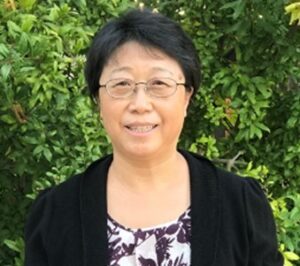
2020 Richard C. Tolman Award Recipient:
Professor Pingyun Feng
University of California, Riverside
June 16, 2021
6:30 pm virtual Social Time
7:00 pm Presentation of Award and Address
Tolman Address:
“All about Crystalline Porous Materials”
The Award: The Richard C. Tolman Medal is awarded each year by the Southern California Section of the American Chemical Society in recognition of outstanding contributions to chemistry in Southern California. The Tolman Medal recognizes broad accomplishments in chemistry rather than a single fundamental discovery. These contributions may be of several kinds, including seminal research of widely regarded influence, achievements of broad impact in chemical technology, significant contributions to chemical education, and outstanding leadership in science on a national level. To be eligible for the Medal, the recipient must have accomplished a major portion of his or her work while a resident of Southern California.
Abstract: Crystalline porous materials such as zeolites play pivotal roles in diverse applications. Using the basic chemistry principle of charge matching, chalcogenide-based crystalline porous materials with semiconductivity and diverse functionality have been synthesized. Through self-assembly, the single-sized chalcogenide tetrahedral clusters acting as building blocks form well-ordered three-dimensional superlattices in the presence of either organic or inorganic species as structure directing agents. The single crystal structural analysis reveals detailed information that could serve as the basis for the elucidation of larger colloidal nanostructures. The diversity of superlattices is achieved by modifying the cluster size, the cluster composition, and the inter-cluster linkage mode. The atom-precise nanoclusters prepared in this research include those that are currently the largest known single-sized semiconducting tetrahedral clusters. Such clusters serve to bridge the size gap between colloidal nanoclusters and small molecular clusters. Metal-organic framework materials (MOFs) are another family of fascinating crystalline porous materials because of their highly tunable compositions, structures, and properties. In this presentation, strategies for the synthesis of new porous MOFs will be discussed, with the focus on the use of different metal ions and their various heterometallic combinations. In addition, the talk will cover our recent strategies developed to optimize the MOF composition and pore architecture for enhanced gas storage and separation through pore space partitioning and engineering. The pore space of MOF can be engineered by using extra-framework ligands or nested cage-in-cage configurations. Furthermore, a broadly applicable synthetic paradigm based on the pore space partition by using complementary coordination properties of multitopic ligands and metalloligands have been developed. This discovery led to a large family of highly stable and tunable porous materials with exceptional performance properties for gas sorption applications including record-setting storage capacity for gas molecules such as acetylene.
Registration: To make a reservation to attend the virtual presentation and address, please sign up at:
You will receive a confirmation email with the zoom meeting link.
Richard C. Tolman Medal
Professor Pingyun Feng
University of California, Riverside
“For outstanding achievements, and exceptional creativity, in the synthesis and design of solid-state materials across multiple length scales and compositions of matter”;
Joshua Figueroa, Tolman Chair
Pingyun Feng received her PhD in 1998 from the Department of Chemistry, University of California, Santa Barbara (UCSB). After two years of postdoctoral study at the Department of Chemical Engineering, UCSB, she joined the University of California at Riverside in 2000. Feng’s research focuses on the synthesis, characterization and application of various types of functional solid-state materials. These materials range from porous metal-organic framework materials to high-surface area semiconductors based on metal chalcogenides. Her group has published about 240 peer-reviewed, high-impact scientific papers. Her accomplishments have been recognized by the Beckman Young Investigator Award, NSF CAREER Award, Camille Dreyfus Teacher-Scholar Award, and an Alfred P. Sloan Fellow award. She is a Fellow of the American Association for the Advancement of Science. Most recently she was recognized by the ACS 2017 F. Albert Cotton Award in Synthetic Inorganic Chemistry.